
Best Educational Charts for Kids in India: A Parent's Guide
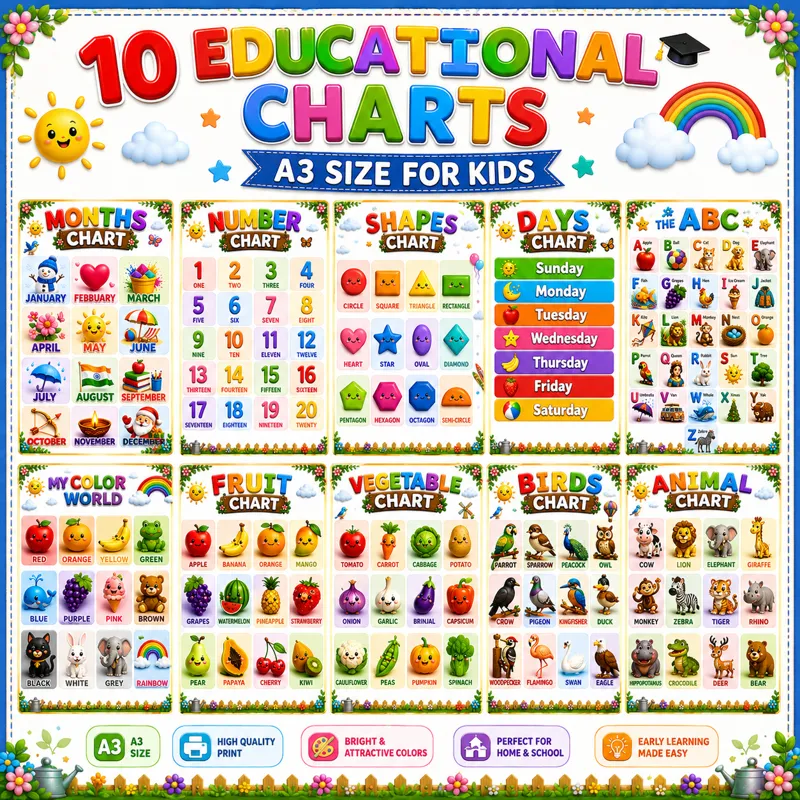
Wall charts are one of the simplest ways to bring everyday learning into a child's room. A good chart is something a child walks past many times a day, which makes it a natural, low-pressure way to revisit letters, numbers and the world around them.
What to look for in an educational chart
- Size you can read from across the room. A3 (297 × 420 mm) is a practical size for home walls and study corners – large enough to see details, small enough for most spaces.
- Clear, uncluttered design. Bold illustrations and readable labels work better for young children than dense text.
- Topics that match your child's stage. Toddlers and preschoolers usually start with basics; older children enjoy charts that connect to what they learn in school.
- Relevant to India. Charts that show Indian states, festivals, foods and monuments help children relate learning to their own surroundings.
Where to put charts at home
Place charts at your child's eye level, near where they play or study. Rotate them every few weeks so they stay interesting, and talk about them together – asking "where is Kerala?" or "which festival is this?" turns a poster into a conversation.
Charts from A Fable World
- My First Learning Charts – Set of 10 A3 Educational Posters – a set of 10 A3 posters for early learners.
- India Learning Posters Combo – Set of 4 A3 Educational Wall Charts – Dances, Festivals, Food and Monuments of India.
- Preschool Tracing Worksheets – 40 Reusable Pre-Writing Sheets (Ages 2–5) – reusable pre-writing practice for ages 2–5.
Browse all learning charts.